
Bong Joon-ho's Parasite (2019) became the first non-English film to win Best Picture, and it did it on a premise anyone can follow: a poor family, the Kims, talk their way one by one into jobs with a wealthy family, the Parks, each posing as an unrelated professional. For a while it plays as a sly comedy of manners. Then the Kims find something in the basement, and the film turns.
What holds Parasite together is ordinary, ground-level plausibility, right up until it isn't. The films below keep that register. Some are stories of infiltration, a have-not slipping into the world of the haves; others are stories of a plan that slowly curdles. A few are the direct ancestors, decades older, that Bong was plainly working from. None of them asks you to have read a thesis on class first.
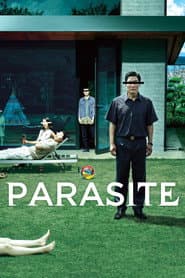
Shoplifters

Hirokazu Kore-eda won the Palme d'Or a year before Parasite did, for a quieter film about the same fault line. A Tokyo household gets by on a grandmother's pension, day labour and small thefts from shops, and it slowly emerges that almost none of them are related by blood. Lily Franky and Sakura Ando play the adults holding this improvised family together.
The kinship with Parasite is the economics of love. Both watch a poor family work as a close, tender unit while the law and the market treat it as a problem, and both leave warmth and survival crime in the same frame without flinching.
The Handmaiden

Park Chan-wook adapts Sarah Waters by moving the story to Japanese-occupied Korea and building it out of cons inside cons. Kim Tae-ri plays a pickpocket planted as a maid to a sheltered heiress (Kim Min-hee), hired to help swindle her out of a fortune. The house is beautiful, and the servants are working an angle in every room.
That is the Parasite move exactly, a working-class operator embedded in a rich household under a false name and a fake résumé. Both films get their charge from the gap between the servant's performed deference and the plan running behind the eyes, and both keep pulling the rug on who is really conning whom.
Saltburn

Emerald Fennell sends a scholarship student, Oliver (Barry Keoghan), home for the summer with a charming, careless aristocrat, Felix (Jacob Elordi), to a family estate the size of a small country. What begins as an outsider's infatuation slowly hardens into something more deliberate as Oliver learns how the very rich actually live.
It runs on the same infiltration Parasite does, an outsider studying a wealthy household until he can move through it as if he belongs. Fennell is glossier and more provocative than Bong, but the spine matches: envy dressed up as devotion, and a guest who was never only a guest.
Tired of picking films by other people's ratings?
MyKinoList predicts your own. Start by rating a few films you've already seen.
Burning

Lee Chang-dong turns a Murakami short story into a slow, uneasy drama about class and envy. Yoo Ah-in plays a broke aspiring writer who reconnects with a girl from his hometown, then watches her drift toward a wealthy, unreadable man played by Steven Yeun. Almost nothing is stated outright, and the film is longer and quieter for it.
Parasite and Burning share the resentment that builds when you are always the one waiting outside the nice gate. Both are precise about the small humiliations of having no money, and both let that pressure gather until it finds a violent, ambiguous release.
Sorry to Bother You

Boots Riley's debut follows a broke telemarketer, Cassius (LaKeith Stanfield), who finds that a chirpy "white voice" launches him up the company ladder. The first half is sharp workplace satire; then Riley swerves into something far stranger that recolours everything before it.
That swerve is why it sits next to Parasite. Both begin as recognisable stories about getting a foot into a richer world, then break their own format to say something harsher about what that world does to the people it uses. In each film, the change of tone is the argument.
The White Tiger

Adarsh Gourav plays Balram, a driver for a wealthy Delhi family who narrates, with very little apology, how he climbed out of servitude, in Ramin Bahrani's version of Aravind Adiga's novel. Priyanka Chopra Jonas and Rajkummar Rao are the employers whose casual cruelty he studies from the front seat.
Where Parasite keeps its class war inside a single household, The White Tiger says the quiet part out loud: the servant sees everything, resents it, and finally acts on it. Both are told from below the stairs, and both know that gratitude and rage can live in one person at the same time.
Knives Out

Rian Johnson dresses a whodunit in cable-knit sweaters and old family money. When the patriarch of a publishing dynasty dies, a drawling detective, Benoit Blanc (Daniel Craig), circles a house full of entitled relatives, while the one person who knows what really happened is the nurse, Marta (Ana de Armas).
Under the puzzle it is a class story told from the help's side, which is the Parasite vantage exactly. Both seat you with the outsider who works for a rich family and let you watch that family show itself, and both enjoy how politely the wealthy can behave while being monstrous.
A Simple Plan

Sam Raimi steps away from horror for a snowbound thriller about ordinary men and found money. Bill Paxton and Billy Bob Thornton play brothers who stumble on a crashed plane full of cash and agree to keep it quiet, a decision that eats them from inside across one long winter.
This is the Parasite of the plan rather than the house. There is no mansion, but the mechanism is the same: people who don't have enough get one shot at more, build a reasonable-sounding scheme, and learn that the scheme comes with a body count. Both films are really about how fast decency erodes once money is on the table.
The Housemaid

Kim Ki-young's 1960 film is a cornerstone of Korean cinema and one of the clearest ancestors of Parasite. A middle-class family hires a maid for their new house, and she quietly turns the household's own appetites and secrets against it until the whole domestic order begins to tip over.
Bong has named this stretch of Korean film as part of his DNA, and the inheritance is right there on screen. The single house as a pressure cooker, the servant who knows too much, class anxiety curdling into something lurid: Parasite runs the same circuit almost sixty years on, with the wiring redone.
The Servant
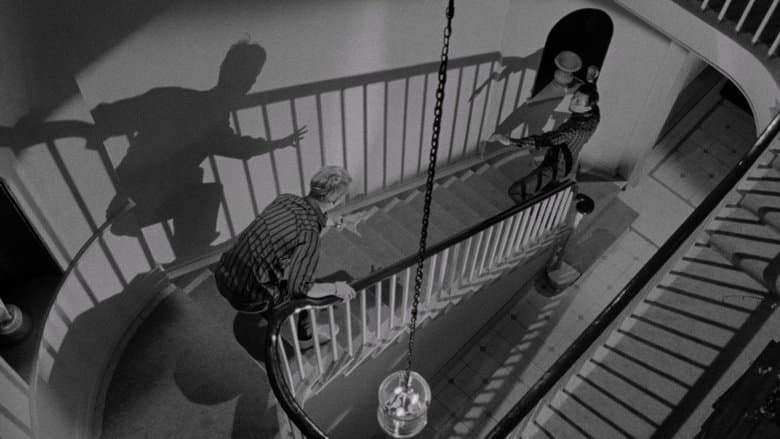
Joseph Losey and playwright Harold Pinter built a cold, exact chamber piece about a wealthy young Londoner, Tony (James Fox), and the manservant, Barrett (Dirk Bogarde), he hires to run his townhouse. By degrees the roles invert, until it is genuinely unclear who serves whom in those elegant, shrinking rooms.
If The Housemaid is Parasite's Korean ancestor, The Servant is its Western one, and it is the sharper cut of the two. The same idea sits dead centre: let the right servant far enough into your home and your life, and the house can quietly become his. A fitting place to end, since it is close to where this whole story starts.
Tired of picking films by other people's ratings?
MyKinoList predicts your own. Start by rating a few films you've already seen.