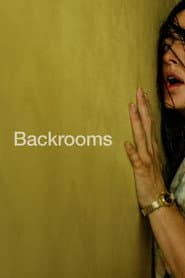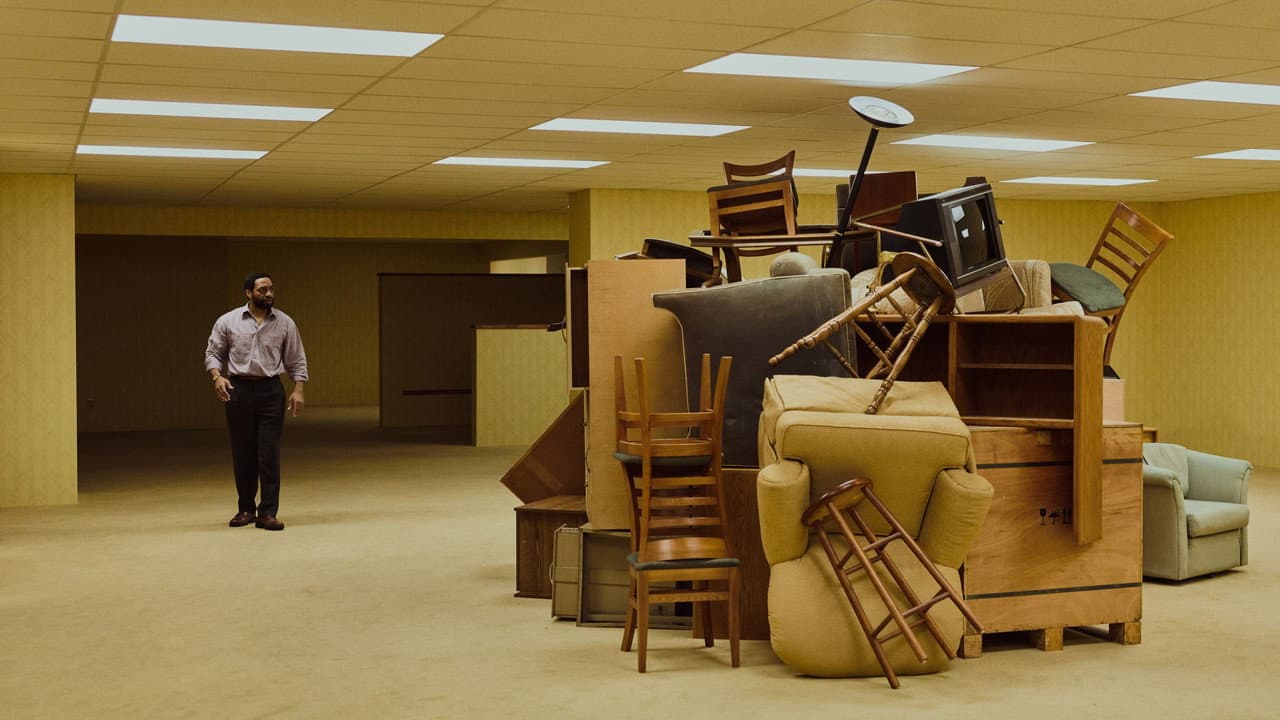
Backrooms is the biggest debut in A24 history — and a film that sends you out of the theater with a list of questions. Is the Backrooms real inside the story, or is it all a metaphor? Who was watching the characters through those cameras? Did Mary actually get out, or was that last scene still inside? Let’s take it in order: where the Backrooms came from, how the space works, what the film hides in its psychology, and what the ending means.
The post that made everyone uneasy
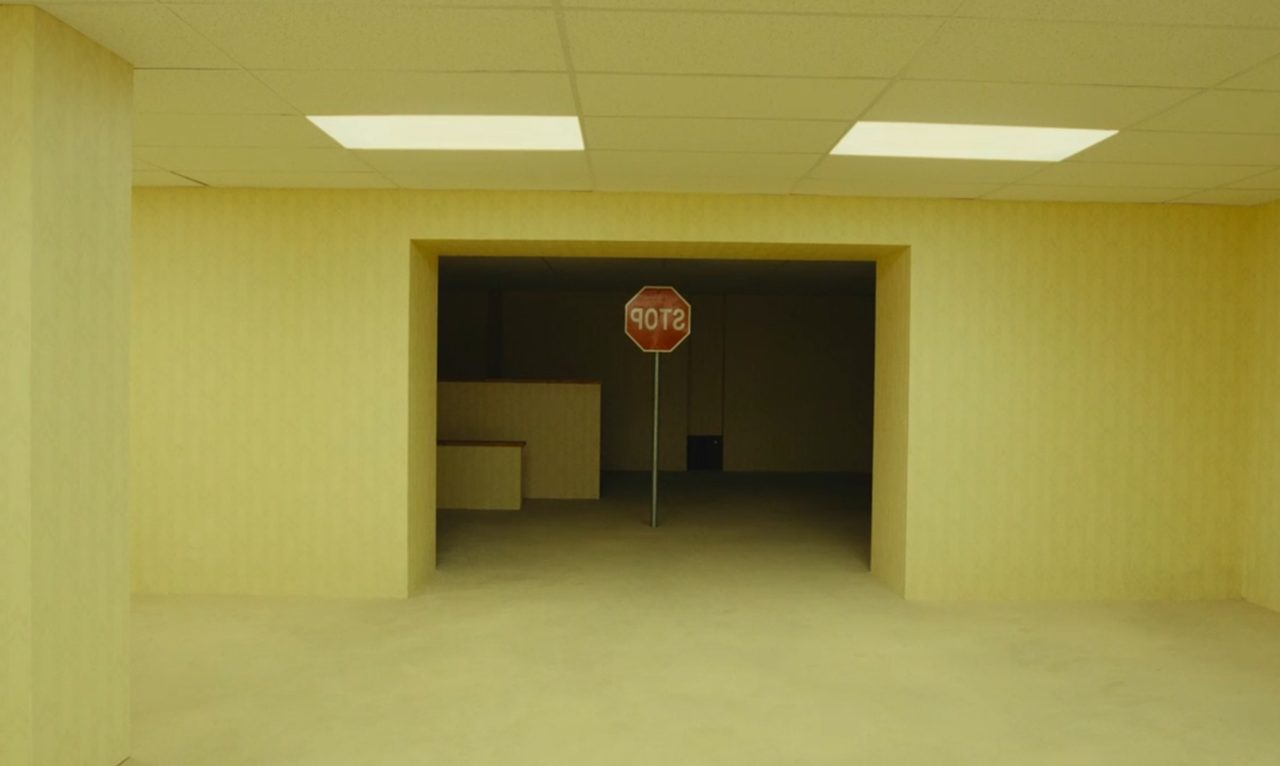
Backrooms is a 200-million-dollar movie that grew out of a 4chan post. In 2019, an anonymous user invited people to share “disquieting images that just feel ‘off’” — and opened the thread with a photo of empty yellow rooms under fluorescent lights. The photo was eventually traced: 2002, a store in Oshkosh, Wisconsin, caught mid-renovation. The remodeling is why the space looks so wrongly empty.
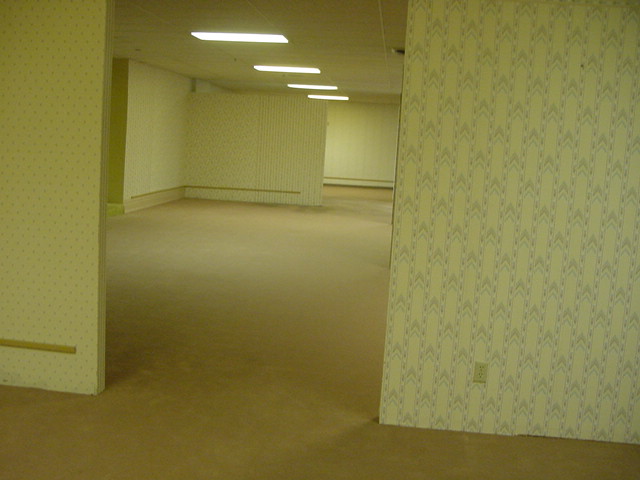
Why did one random photo of an empty store get under the skin of millions? Places like this are called liminal spaces: hallways, waiting rooms, movie theaters, offices after closing — transitional places where nobody lives. They unsettle us because we’re used to seeing them full of people. When we see them empty instead, the brain reads it as wrong — as if we’re not supposed to be there either. And these photos tend to carry a whiff of childhood and déjà vu: they look like somewhere you’ve been, but not quite — more like the memory of it. The yellow rooms became the icon of the whole aesthetic.
Then the collective mind took over. Another anon replied to the photo with a legend about noclipping. It’s a gaming term: “clipping” is the collision system that keeps a game character from walking through walls or falling through floors. Noclip is the cheat mode that switches it off. A player who accidentally falls through the floor ends up in a place that exists but was never meant to be visited — the unfinished inside of the map. “Noclip out of reality,” said the 2019 post, and you’ll end up in the Backrooms: six hundred million square miles of empty rooms that smell of old moist carpet, hum with fluorescent light, and are not quite uninhabited.
The lore grew the way folklore does: levels, entities, survival rules. In 2022, sixteen-year-old Kane Parsons, posting as Kane Pixels, uploaded a short called “The Backrooms (Found Footage),” built in Blender. His series went on to collect nearly 200 million views, and A24 hired him to make the feature — the youngest director in the studio’s history. James Wan, Shawn Levy and Osgood Perkins produce.
Spoilers for the entire film, including the ending, from here on.
What the film kept from the lore
The original Backrooms is a setting. The creepypasta and the videos answer the question “what is this place and how do you survive it.” The film tells a different story — about a man stuck inside his own painful memories. From the lore, Parsons kept the yellow-room aesthetic, the Async corporation and the idea of copy-creatures, and deliberately cut everything else. He told Indiewire he didn’t want to “drown people in lore and mythology”: an overloaded universe pushes away anyone coming in for the first time.
The film never explains where the Backrooms came from. From Parsons’ videos we know the space appeared after an accident during an Async equipment test on the day of the real 1989 Loma Prieta earthquake. In the film we only know that Async studies the place and keeps sending people in. And the opening scene lets us guess that not all of them make it back.
How the Backrooms works: memories that decay
Clark spells out how the place operates. It “remembers” real rooms, objects and people — and every time it remembers them, it remembers them worse. He explains the mechanics with a metaphor worth quoting in full:
Imagine describing a dog to someone who’s never seen one before — and then asking them to draw it. Some of it they’d get right. But there’s no way they’d get everything right.
Every act of remembering damages the copy. And here the film — by accident or not — describes real psychology: memory reconsolidation. Each time we recall an event, we slightly rewrite it; our most-replayed memories are our least reliable ones. Which is why the most precise image for the Backrooms is a photograph of a dream. In a dream, a pile of chairs passes for a pile of chairs until you start looking closely. But if you could photograph a dream and study the picture while awake, it would look deranged: proportions drift, people wear the wrong faces, the room is familiar and warped at once. The film shows exactly that — a space assembled by dream logic, rendered at a sharpness dreams never allow.
One more thing separates the Backrooms from classic haunted places: it has no intent. Its closest relative — the Overlook Hotel from The Shining — wasn’t born evil either: in King’s book it’s a sponge that spent decades soaking up murders, suicides and mob hits. But having soaked it all up, the Overlook grew a will and an appetite: it wants Danny and his shining, it works on Jack deliberately, its ghosts follow a plan. The Backrooms absorbs the same way — and never grows a will. Along with rooms and faces, the space records what people carry inside: fear, trauma, swallowed anger — and returns it in the same distorted form as the furniture. Both places are sponges; the difference is that one became a predator, and the other stayed a crooked mirror.
How it’s shot
Parsons built his YouTube shorts as found footage — film that belongs to someone inside the story. The feature keeps the habit: most scenes inside the Backrooms are handheld, shot from within the group. The camera breathes, lags, glances over its shoulder — it behaves like one more lost person. We’re exactly as disoriented as the characters. And the nature of the place cancels the genre’s usual tricks: in an endless labyrinth, “don’t go into the dark room” doesn’t apply. The dark room is everything.
Watching in this film always runs both ways. The characters film the Backrooms — and the Backrooms, or rather Async, films them. One night Clark’s TV switches itself to a feed of a yellow room with a cardboard figure — a surveillance camera stream — and cuts out; that’s how he finds the way in. Inside, he finds that very room. Attached to the cardboard caveman is a speaker playing greetings in dozens of languages — audio from the Voyager Golden Record, humanity’s “hello” recorded in 55 tongues and launched into the void in hope of an answer. Async plays it here either as bait or as an attempt at contact. Clark walks into the frame, and Phil sees him. Later, when the scientist spots Clark’s pirate commercial on TV and recognizes the man from the feed, the chain closes: the commercial leads the corporation to the store and the passage. Clark’s ridiculous ad turns out to be both the monster’s blueprint and the clue by which Async’s world finds Clark’s.
The psychology of Clark and Mary
Clark (Chiwetel Ejiofor) is a failed architect and the owner of a furniture store with no customers, recently left by his wife. A man at the bottom of a hole he dug himself: he drinks, he lashes out, and he blames anyone but himself.
Dr. Mary Kline (Renate Reinsve) is his therapist — and she has a locked room of her own. In flashback, little Mary tries to peek out a window papered over with newsprint, and her mother drags her away in terror: it’s dangerous out there, “they’re everywhere.” The mother clung to that house all the way to an institution; what Mary kept from that childhood is a chunk of concrete with her own small handprint, which she carries around to this day. Grown-up Mary wrote a book called The Window Within and teaches people the exact thing she can’t do herself. She’s just as alone; her loneliness is simply better hidden.
In session, Mary says the line that could caption the whole film: “A path you’ve known since childhood. You learned to push people away before they could hurt you — and now, as an adult, you’re stuck where it all began. Alone.” It’s addressed to Clark, but it fits her without a single edit. She lets no one in either; she’s stuck in her own childhood room — she just carries a piece of it in her pocket.
The session moves into role-play: Mary plays the wife, and Clark unravels in real time. In his version of the world, everyone is guilty but him. He drinks because work exhausts him. He never became an architect because his wife was studying and someone had to pay the bills. The wife is guilty of not working; guilty of wanting a child. Remember this: the film first lets us hear how Clark tells his own life, so that later it can show us how the Backrooms remembers it.
There’s one more key phrase in the film. Clark listens to Mary’s audiobook in the car: the untrained mind accumulates loops and habits — “behaviors that keep you drifting in circles” — and builds walls and barriers to protect itself from the world. Loops, circles, protective walls. The Backrooms is that idea, illustrated.
Why doppelgängers scare us
The creatures the space makes out of people are called Still Lifes. Their logic follows from the mechanics of the place: the Backrooms copies rooms along with the people who were in them.
Captain Clark (the fans’ name for the monster) is not a person but a memory of one — exaggerated, and living a life of its own. To the world, Clark is forever the clown from a furniture commercial, no matter that he considered himself an architect.
You could also call the Still Lifes doppelgängers — dark doubles. In European folklore, meeting your double means death is near, and cinema has run that plot many times: Vertigo, Enemy with two Gyllenhaals, Jordan Peele’s Us, the Black Lodge doubles in Twin Peaks. Backrooms takes the omen literally: Clark meets his double, and the double kills him.
And if you want to dig deeper, there’s Baudrillard, who described simulacra — copies with no original left behind them (the very book Neo hides his discs in, in The Matrix). Baudrillard was writing about advertising and television, but the mechanism is the same: the image detaches from what it depicted and starts living on its own. Mary’s childhood home has been demolished — and its copy inside the Backrooms stands, and will keep standing.
The mural: a diary on a wall
Before she finds Clark, Mary finds a room with a mural. The painting on the wall literally predicts where the plot is going. At the center, large: a black figure in a triangular hat about to devour a small yellow man. The throne beneath it looks like tree roots. Clark and the Backrooms are already one organism.
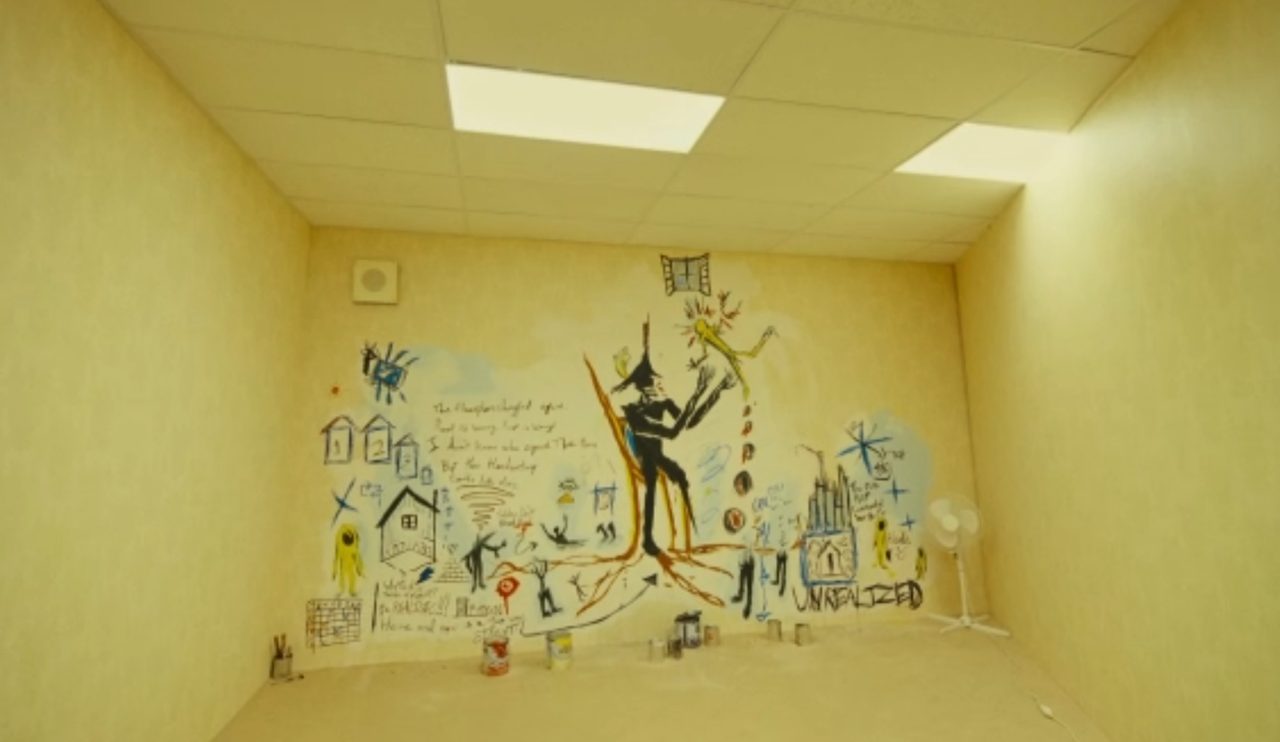
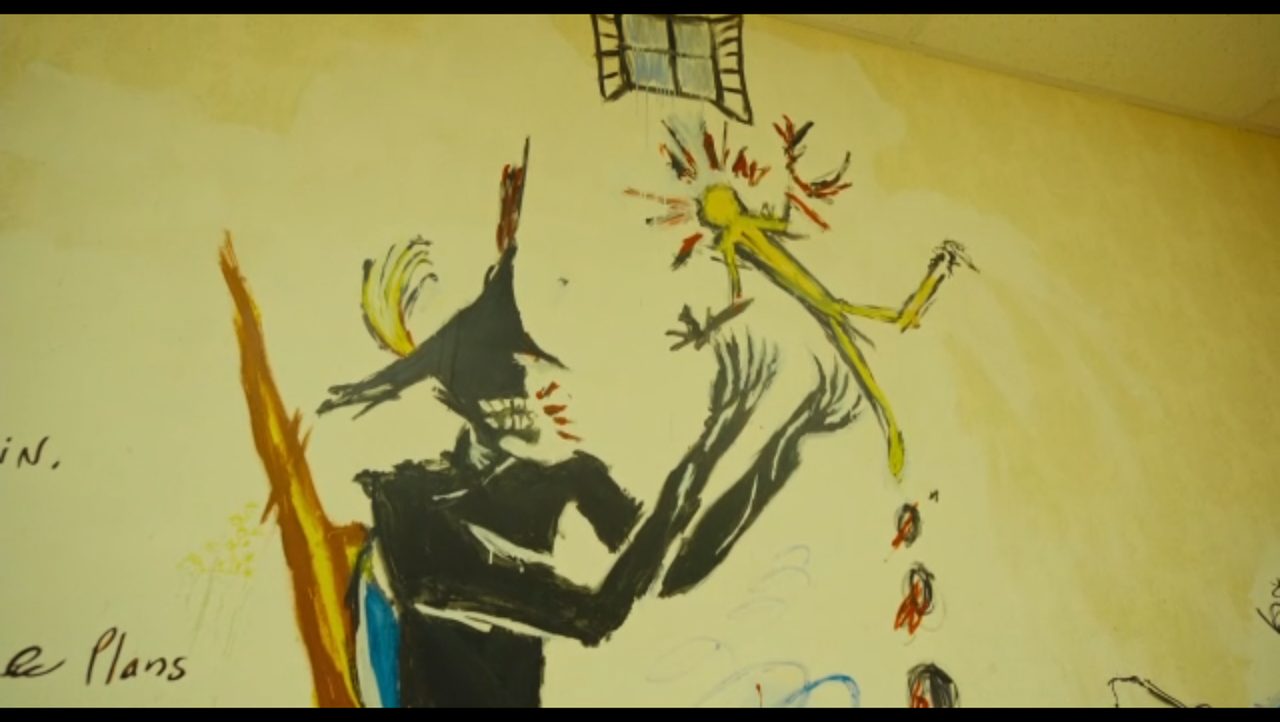
Above the violence, someone painted a window — windows run through Mary’s whole storyline. In the corner, one huge word: UNREALIZED. Next to it, a city with towers and a construction crane. The blueprints that never happened. A calendar with days crossed out — someone was counting. Faceless yellow figures that look a lot like people in hazmat suits: Async made it onto the mural before it made it into the frame. A house with a little figure locked inside. And two lines that make you go cold. “Why think in terms of magic?? Be REALISTIC!!!” — the voice of common sense, arguing with itself on the wall of an impossible place. And “Tables Don’t Bleed Blood.”
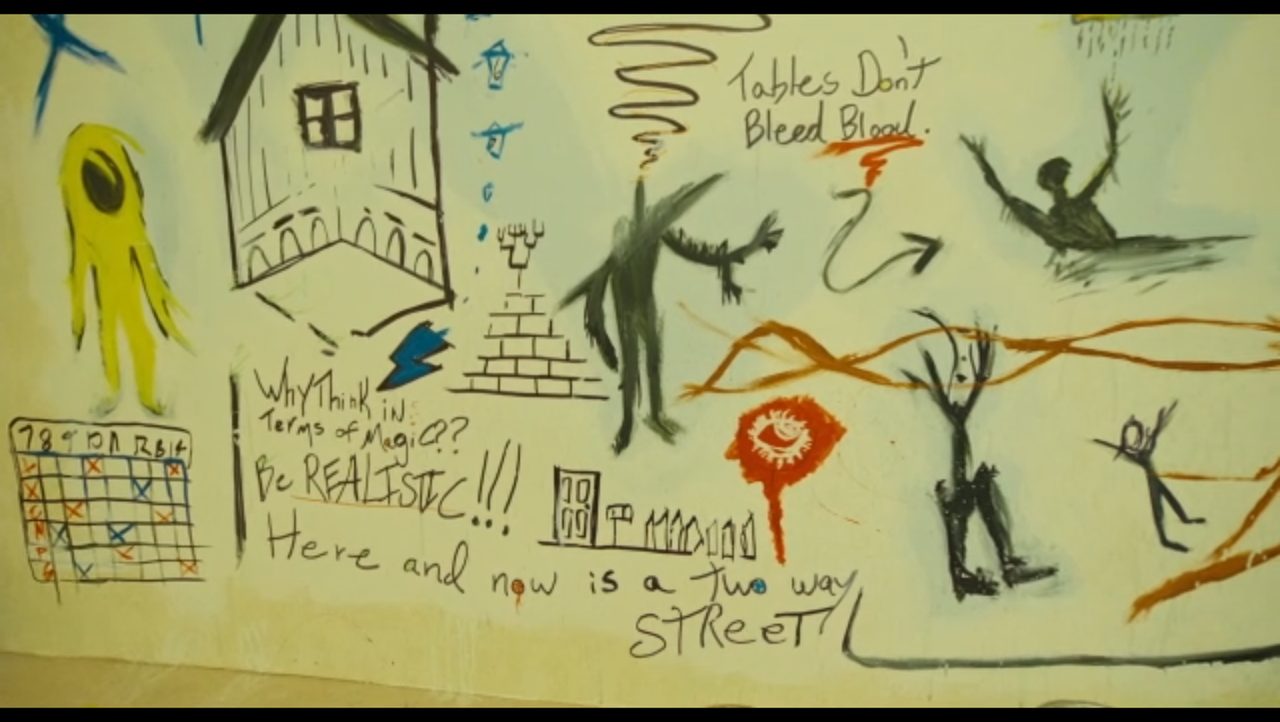
That last line is a key to two scenes at once. It’s an eater’s self-justification: the copies are furniture, furniture doesn’t bleed, so eating them isn’t murder. In the dining room, Clark will say the same thing out loud: “they just exist, like furniture.” Who painted the mural — Clark, or someone who was here before him — the film doesn’t say. We’ve seen Clark’s drawings earlier, and they were structured, geometric. This is pure chaos.
Whoever painted it, a question remains: how did they know about things that hadn’t happened yet? Maybe the yellow man isn’t Clark at all? Or maybe time in the Backrooms doesn’t run in a straight line?
And one more line, the most unnerving of all: “Here and now is a two way street.” Read literally, it means the passages work in both directions. Does that mean the entities can leave? The line reads like a sequel promise, left right there on the wall.
Clark: the man who chose to stay stuck
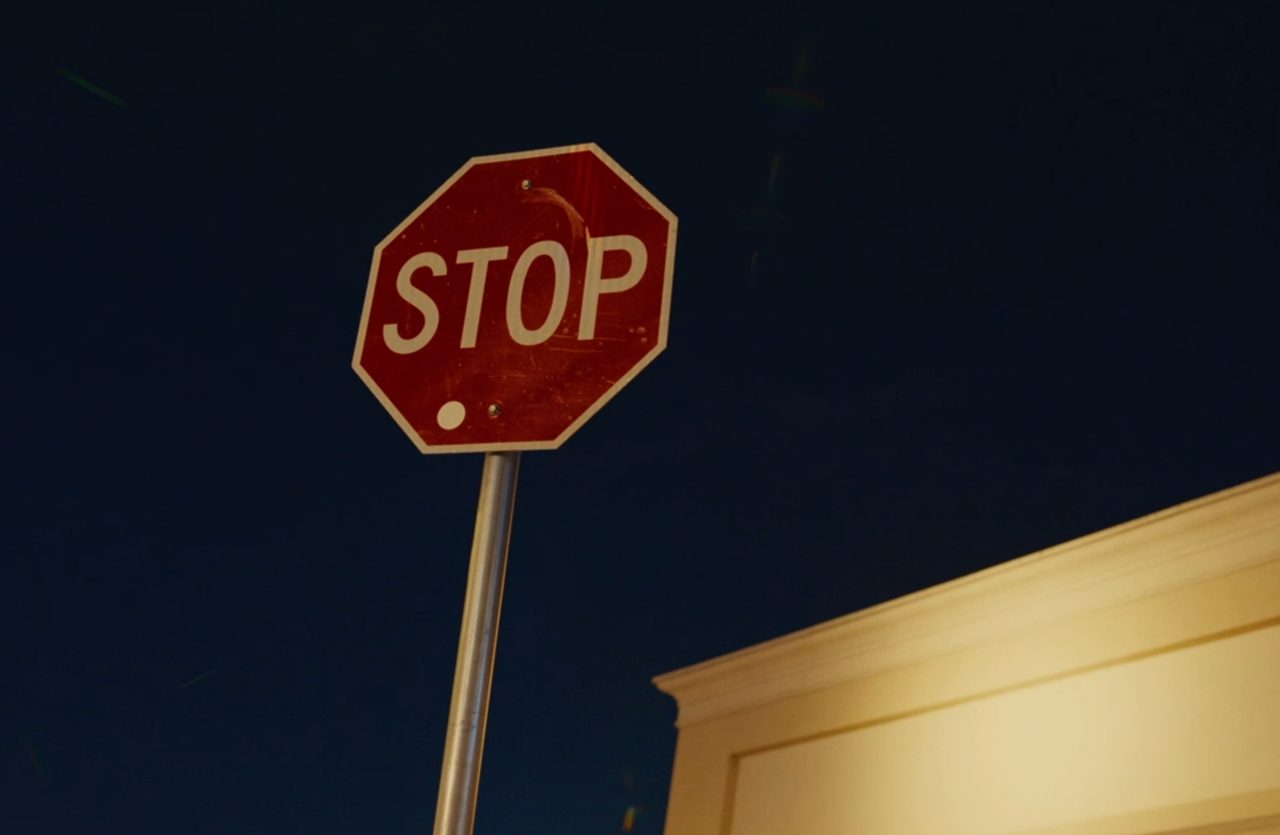
Clark likes it better inside than outside. The man who complained in therapy about being stuck in his own life ends up choosing to get stuck — in a place built of warped memories. Parsons has a word for it: an “echo chamber” that reflects Clark’s interior world. The loop has a clinical name too — rumination: circling the same grievances with no exit. Mary told Clark about loops and circles long before the portal; the Backrooms simply cast his rumination in architecture. It’s no accident that on his first visit, fleeing, he arrives back at the same mirrored STOP sign he started from: even the routes here run in circles.
And as Clark goes down, he pulls people with him. Kat, his store manager, goes into that basement not out of curiosity — you don’t say no to your boss. Her boyfriend Bobby follows Kat. Mary follows her patient. None of them were looking for the Backrooms. Each was dragged in by someone else’s collapse, along a chain of obligations: work, love, professional duty. It’s a mechanism familiar to anyone who has lived near a person in freefall: he doesn’t drown alone. Bobby dies on camera; what happened to Kat, we understand from Clark’s refrigerator. Who exactly killed them, the film never shows: Captain Clark is the obvious suspect, but it’s not in the frame.
The dining room scene: “Don’t change”
In the dining room, Clark lives as the man of the house: he sets the table, surrounded by his “family” of copies. A copy of the electrician; a man in a wheelchair, flicking a lamp switch on and off; a copy of his wife in the corner. Clark says it plainly: the place remembers people. And adds his own view — these warped people are beautiful in their way: they feel nothing, they simply exist, like furniture. “And my favorite part — you can eat them.” The furniture salesman finally got the company of his dreams: people who became furniture.
When Mary comes to, tied up in the middle of this “family,” Clark greets her with a quote from her own book — the untrained mind, the habits, the loops. He doesn’t want help from her. He wants a signature on his surrender: tell me I did nothing wrong, tell me you were wrong about me. Mary agrees — too quickly — so Clark demands they act it out: he takes the scalp off his wife’s copy and puts it on Mary. The role-play from the film’s beginning returns in monstrous form — now Mary plays the wife wearing the real wife’s hair, and the therapy is run by the patient.
And Mary breaks the script. She steps out of the role and, for the first time, speaks without professional politeness: his wife didn’t leave because of the drinking or the job. She left because with Clark, everyone else is always to blame; because this is what he is. And when he says “I don’t want to change,” she answers with permission. Don’t change. I can’t save anyone, no matter how much I want to. It frees them both: he no longer has to perform the desire to change; she no longer has to be everyone’s rescuer, which is her unfinished business from a childhood with a mother who couldn’t be saved.
Captain Clark walks in, and the first one to bolt from the room in panic is the wife’s copy. It’s fair to guess that just as Captain Clark inherited his prototype’s rage, the wife’s copy inherited her fear — and that in life, Clark may have been far more violent than the role-play let on. Clark tries to talk the monster out of it: “she gave us permission not to change.” And the copy eats him. The permission is executed literally: the dark double won.
Captain Clark
The monster is a copy of Clark from the commercial for his own store — “Cap’n Clark’s Ottoman Empire” (Clark in the ad is half pirate, half sultan, on a throne that collapses under him at the end of the shoot). The arm juts out at an unnatural angle because in the ad Clark held a crutch under it; instead of a leg, a piece of costume wood. The space remembered Clark at the most ridiculous, most public moment of his life — and grew a several-meter creature out of that memory.
The copy inherited more than a pose. Clark ate the copies of people — and his own copy does the same: it eats the man it was copied from. The space returned Clark’s habit to him, scaled up to monster size.
Why does Captain Clark bleed, while the other copies are filled with something like dry biomass? Here’s a hypothesis that fits the mechanics: the others are copies of people who were never inside. They were drawn from second-hand memory — from a description of a dog. Clark spent a long time inside, and lived next to an entrance before that: he was copied from life, and the copy came out more alive — in the worst possible sense.
Now look at its face. There’s no malice in it. It looks lost and lonely, almost pleading. Maybe Captain Clark chases people not as a predator but as someone reaching out. He just happens to be built out of rage and resentment, and attacking is the only thing he knows how to do.
Clark is eaten by his own suppressed, wounded part, which grew until it was stronger than he was. Self-destruction, carried to its final form. Call it a metaphor for suicide: he drank, he pushed people away, he blamed the world, and when he finally refused to change, the dark part swallowed him. What really destroyed Clark was his own years-long refusal to face himself.
The ending
Mary’s escape is its own exercise in deception. She comes out into what looks like the store’s basement, climbs the stairs — familiar signage, furniture, she’s out. In the middle of the sales floor stands another cardboard caveman with the recording. And behind the exit door — a blank wall. What was that? A copy of the store inside the Backrooms? The real store, already being digested? Async sealing off an entry point? The film doesn’t answer, and it’s the film’s most unnerving move: the border between inside and outside quietly stops existing somewhere along the way, and the viewer misses the crossing exactly like Mary does.
Captain Clark catches up with her — and she smashes her chunk of concrete, the one with the childhood handprint, against his head. The object she carried all her life as the weight of her mother and a childhood behind papered windows becomes, for once, a weapon — and is destroyed along with the monster. Clark surrendered to his trauma, and it ate him. Mary broke hers against the creature’s skull. Unlike Clark, Mary never gave up — and this is what her release looks like. A moment later, people in hazmat suits arrive.
The interrogation room. Phil (Mark Duplass) is nervous; his eyes keep sliding to the dark glass — someone is watching him too, not just Mary. He explains: Async used to build MRI machines, until they found the place; now his job is to walk in every day and draw maps. The film backs this with a prop: a framed newspaper clipping about the Async Research Institute and its MRI work.
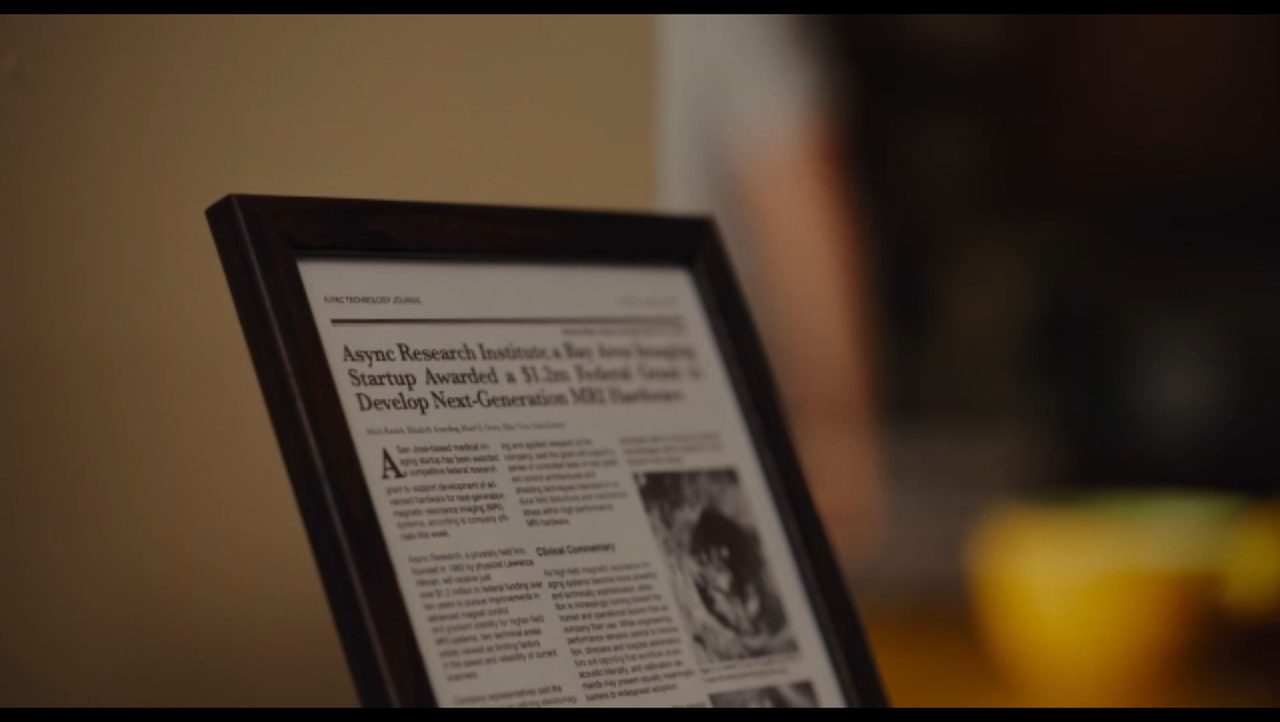
Machines built to look inside the human body led the corporation to a space that behaves like a giant brain — and Phil maps someone’s subconscious as office routine. By his own admission, he can’t wrap his head around the place. He fumbles for words — and Mary picks up the sentence: “It’s like describing a dog to someone who’s never seen one.”
That’s the film’s climax, hidden in a single line. Mary is quoting Clark — her patient’s words, the ones she once listened to with a professional nod. The session has come full circle: the therapist sits in the patient’s chair, explaining the unexplainable in borrowed words, because no words of her own exist for what she’s been through.
And in that moment something like recognition crosses Mary’s face. The film immediately shows us what: her demolished childhood home, standing in the Backrooms, and next to her handprint — a second one. Her mother’s. The house that no longer exists in reality goes on existing there. Then the camera sinks through the layers of the space to a deformed copy of Mary, sitting quietly in a copied room. The mother held on to the house until it consumed her mind; now the house, quite literally, holds the daughter. Not Mary herself — her copy.
Which suggests a theory the film never states but seems to point toward. Phil admits that passages keep appearing all over town, and Async has no idea what connects them. What if Mary’s childhood home was one of them? Then her mother’s fears stop being just an illness. “They’re everywhere” — maybe she wasn’t raving; maybe she was describing something she’d seen, the only way she could. The papered-over windows weren’t a symptom but a defense. It would explain why the rooms of that particular house echo so readily in the Backrooms — and why the space “learned” Mary so easily. The darkest extension: Async itself may have had a hand in demolishing the house, cleaning up an entry point. No proof — but it’s a theory worth sitting with.
A note on the music of this storyline. The scene with Mary’s mother in the institution is scored with The Caretaker. The album “Everywhere at the End of Time” is built as a simulation of dementia: 1930s ballroom records played over and over, decaying with each pass until nothing is left but noise. Music written by the same law the Backrooms lives by: a memory degrades every time it’s played. And there’s a coincidence that isn’t one: The Caretaker project was born out of the ballroom scene at the Overlook — Leyland Kirby was inspired by the ghost music in The Shining. A film that argues with King thematically hired a musician who grew directly out of him.
So did Mary get out?
The question half the theater walks out with: is the Phil scene even set in reality? The interrogation room is sterile, sealed, windowless; there’s someone behind the dark glass; Phil himself either knows the place from the inside or understands nothing about it. After the fake store with a wall behind its exit door, trusting any “reality” in this film is hard — and the ambiguity is clearly built on purpose. There’s also a radical fan theory: everything we’ve seen, Mary’s childhood included, takes place inside the Backrooms — even the film’s “real” locations look empty and slightly wrong, the sky painted, the streets underpopulated. To our taste that goes too far: the story loses its anchor, and with it the point. More likely it’s simply the film’s overall style.
Either way, the ending is built so that Mary isn’t free in either case: if the interrogation room is real, she’s Async’s prisoner; if it isn’t, she never got out.
Interpretations, briefly
The psychological one: the Backrooms is an echo chamber, a space that returns to people their own contents, distorted. Clark’s story is about self-destruction and the refusal to change; Mary’s is about trauma you either freeze inside of or face.
The scientific one: Async, a former MRI manufacturer, maps a space that behaves like a giant brain, understanding little and losing people inside.
The fan one: the Backrooms comes for people at their lowest. Clark is in the ruins of a marriage and a business; Mary carries an unprocessed childhood. Bystanders like Kat and Bobby are just prey — Clark and Mary get personal copies.
And one for the trash: “it all happened in Mary’s head, Clark was her invention.” The chronology kills it: Clark enters the Backrooms long before Mary, and she only gets there by following him.
Beyond that, he prefers not to over-explain and leaves viewers to form their own readings. He says he has several seasons of Backrooms material left and sees television as the way to continue.
Tired of picking films by other people's ratings?
MyKinoList predicts your own. Start by rating a few films you've already seen.